Desk Job Knee & Hip Pain: Why Sitting Hurts More Than Your Back
FULL ARTICLE
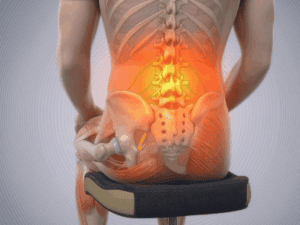
When people think about desk jobs and pain, the first thing that comes to mind is usually back pain or neck stiffness. However, many office workers are surprised when knee pain or hip pain slowly creeps in, even though they rarely exercise or strain those areas.
If you have a desk job and experience:
- Knee discomfort when standing up
- Hip tightness after long hours of sitting
- Pain when climbing stairs or getting out of a chair
- A feeling of stiffness rather than sharp pain
You are not alone. Prolonged sitting affects more than just your spine. In fact, your hips and knees may be taking more stress than you realise.
Why Sitting Is Harder on Your Body Than You Think
The human body is designed for movement. When we sit for prolonged periods, especially in fixed positions, several systems are affected at once:
- Joints stop moving through their full range
- Muscles shorten or weaken
- Blood circulation slows
- Nervous system feedback becomes less efficient
While the spine often gets the blame, the hips and knees quietly absorb much of the strain created by long hours of sitting.
The Hip: The Hidden Victim of Desk Jobs
Your hips are meant to move in multiple directions, walking, squatting, rotating, and stabilising your body. Sitting places the hips in a constant flexed position, often for 8–10 hours a day.
Over time, this can lead to:
1. Tight Hip Flexors: When the hip flexor muscles stay shortened, they pull the pelvis forward and alter posture.
2. Reduced Hip Extension: Limited ability to straighten the hip affects walking mechanics and increases strain on the lower back and knees.
3. Poor Load Distribution: When hips don’t move well, other joints compensate, commonly the knees. Many people with hip dysfunction don’t feel hip pain initially. Instead, the discomfort shows up elsewhere.
How Hip Problems Lead to Knee Pain
The knee is primarily a hinge joint. It depends heavily on the hips for proper alignment and movement control. When hip mobility or strength is compromised:
- The knee absorbs forces it was not designed to handle
- Tracking of the kneecap may change
- Stress increases on ligaments and cartilage
This is why some desk workers develop knee pain even though they:
- Don’t run
- Don’t squat heavily
- Don’t play sports
The issue is not overuse — it’s underuse and poor movement patterns.
Why Sitting Can Irritate the Knees
Even though the knees are bent while sitting, prolonged sitting still stresses them in subtle ways.
Common desk-related knee issues include:
- Stiffness after sitting for long periods
- Pain when standing up from a chair
- Discomfort during stairs or squatting
These symptoms often come from:
- Reduced joint lubrication due to lack of movement
- Weak quadriceps or gluteal muscles
- Poor circulation
- Altered joint mechanics from hip or pelvic imbalance
Again, pain does not always mean injury — it often means reduced function.
Posture Matters More Than You Realise
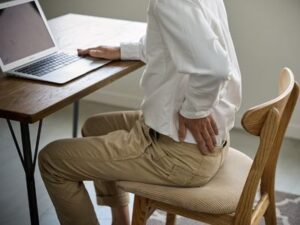
Desk posture is not just about sitting up straight. Poor sitting posture can alter how weight is distributed through the pelvis, hips, and knees.
Common postural habits that affect hips and knees:
- Sitting with legs crossed
- Slouching into the chair
- Sitting on the edge of the seat
- Feet not flat on the floor
- Leaning consistently to one side
Over time, these habits create asymmetrical loading, which the body compensates for — often silently.
Why You May Feel Pain Only After Work
Many desk workers say:
“I feel fine at work, but once I stand up or get home, the pain starts.”
This happens because:
- Sitting limits joint motion
- Muscles become stiff
- Nervous system input is reduced
Once you start moving again, the body suddenly demands motion from joints that haven’t been moving properly all day. This is when discomfort shows up.
Desk Job Pain Is Not Just About Being “Inactive”
It’s easy to assume knee or hip pain means you need to exercise more. While movement is important, the issue is often how your joints are moving, not just how often.
Some people exercise regularly but still experience desk-related pain because:
- Their joints don’t move efficiently
- Old injuries were never fully addressed
- Muscle imbalances persist despite workouts
This is where chiropractic care looks beyond symptoms.
How Chiropractic Care Helps Desk-Related Hip & Knee Pain
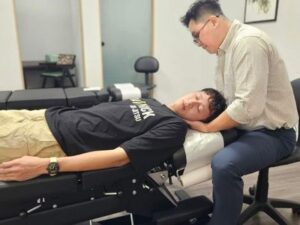
Chiropractic care focuses on restoring joint movement, alignment, and nervous system communication — not just relieving pain.
1. Assessing the Entire Kinetic Chain
Rather than focusing only on the knee or hip, chiropractors assess:
Spine and pelvis
Hip mobility
Knee mechanics
Foot and ankle movement
This full-body approach is critical for desk workers.
2. Improving Joint Mobility
Restricted joints don’t move or load properly. Gentle chiropractic adjustments help restore natural motion to:
Hips
Pelvis
Knees
Lower spine
This allows forces to be distributed more evenly.
3. Addressing Postural Imbalances
Chiropractic care helps correct postural patterns developed from prolonged sitting, reducing uneven stress on joints.
4. Supporting Nervous System Function
Movement quality depends on how well the brain and body communicate. Joint restrictions reduce sensory feedback, affecting coordination and balance.
Chiropractic Care Is Not Just “Cracking”
One of the biggest misconceptions is that chiropractic care is only about cracking sounds or aggressive adjustments.
In reality, care may include:
- Gentle joint mobilisation
- Low-force or instrument-assisted techniques
- Soft tissue work
- Movement and ergonomic advice
Especially for desk workers, the goal is restoring function, not forcing movement.
No Pain Does Not Mean Everything Is Fine
Many desk workers only seek help when pain becomes severe. However, joint dysfunction often develops long before pain appears.
Signs your hips or knees may need attention:
- Reduced flexibility
- Uneven wear on shoes
- Clicking or stiffness
- Fatigue when standing or walking
- One side feeling tighter than the other
Chiropractic care is effective not only for pain relief, but also for prevention and performance.
Why Stretching Alone Is Often Not Enough
Stretching is helpful, but if joints are restricted, muscles often tighten as a protective response.
Without addressing joint mechanics:
- Stretching may provide temporary relief
- Tightness often returns quickly
- Compensation patterns remain
Chiropractic care works on the joint level first, allowing muscles to relax more naturally.
What to Expect at a Chiropractic Visit for Desk-Related Knee & Hip Pain
A proper assessment goes beyond “where does it hurt.”
Your chiropractor may assess:
- Sitting and standing posture
- Walking mechanics
- Hip and knee range of motion
- Pelvic alignment
- Previous injuries and lifestyle habits
X-rays may be recommended if clinically appropriate, especially for long-standing or recurring issues.
Ergonomics Alone Is Not the Full Solution
Standing desks and ergonomic chairs are helpful, but they cannot correct existing joint dysfunction.
Many people invest in ergonomic setups yet still experience pain because:
- The body has adapted to poor movement patterns
- Joints remain restricted
- Muscles continue compensating
Chiropractic care complements ergonomics by addressing the body, not just the workspace.
Desk Workers Are Not “Low-Risk” for Joint Issues
Knee and hip problems are not limited to athletes or manual workers. Sedentary lifestyles create a different type of stress, one that is gradual and often overlooked.
Desk-related joint pain is:
- Common
- Progressive
- Preventable
Early intervention makes a significant difference.
Why Desk Workers in Singapore Are Seeking Chiropractic Care
Long working hours, screen-based jobs, and high stress levels make joint dysfunction increasingly common in Singapore’s workforce.
Chiropractic care offers:
- Drug-free management
- Personalised assessment
- Long-term functional improvement
It is suitable for both symptomatic individuals and those looking to prevent future issues.
Final Thoughts
Sitting does not just affect your back. Over time, it places significant strain on your hips and knees, often without obvious warning signs.
Desk-related knee and hip pain are usually not caused by injury, but by restricted movement, poor posture, and prolonged inactivity. Chiropractic care addresses these root causes by restoring joint mobility, improving posture, and supporting healthy movement patterns.
Pain relief is important, but long-term joint health is about function, balance, and prevention, especially for desk workers who sit for most of the day.